 Property
Five separate data releases landed this week, and each one changes the math for someone making a housing decision right now. Here is what happened, sourced and dated, plus what it actually means for you.
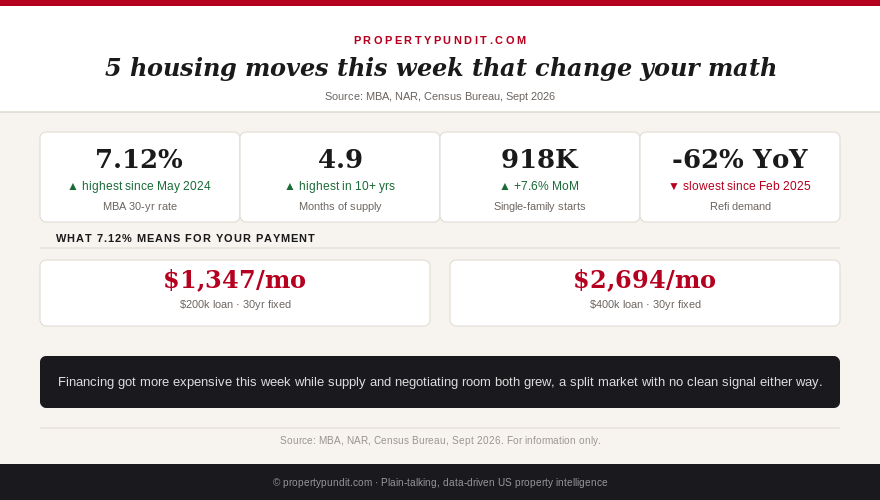
1. Mortgage rates hit 7.12%, the highest since May 2024
The stat: MBA's Weekly Applications Survey for the week ending September 18, 2026 put the average 30-year contract rate at 7.12%, up from 6.97% the prior week and the highest reading since May 2024. Freddie Mac's official PMMS, a separate weekly survey, still shows 6.95% as of September 17.
So what: If you have a pre-approval from even two or three weeks ago, ask your lender to re-run it before you make an offer. A move of this size can change your maximum purchase price by tens of thousands of dollars.
Get this in your inbox every Friday.
One email. The number that matters and what it means for you.
2. Existing-home supply hit its highest level in over a decade
The stat: NAR's August 2026 existing-home sales report, released September 10, showed a 3.98 million seasonally adjusted annual sales pace, down 2.0% from July, alongside 4.9 months of supply, the highest reading in more than ten years. Median existing-home price was $429,100, up 1.6% year over year.
So what: This is bargaining power for buyers, not a crash. Slower sales plus rising supply means more room to negotiate on price, closing costs, or repairs than at any point in recent memory, even with rates elevated. Sellers who priced their home for a faster market two years ago are increasingly the ones offering concessions to get a deal done. If you’re shopping, use that negotiating room while it exists; don’t assume it disappears the moment rates eventually fall, since falling rates would likely pull more buyers back into the market and erode exactly the advantage sellers are conceding today.
3. Builders finished more homes, but permitted fewer
The stat: Census Bureau data for August 2026 showed single-family housing starts up 7.6% from July to 918,000, even as single-family permits fell 1.8% to 878,000. Total starts fell 2.6% month over month once multifamily is included.
So what: Starts reflect construction that began this month on lots permitted earlier; permits reflect what builders plan to build next. Builders finishing existing projects while pulling back on new permits is a caution signal for 2027 supply, not this year's. If you’re counting on next year's new-construction inventory to ease your search, this week's data is a reason to have a backup plan.
4. Refinancing fell to its slowest pace since February 2025
The stat: The same MBA survey showed refinance applications down 3% for the week and 62% below year-ago levels, the slowest refinance pace since February 2025. ARM share of applications climbed to 9.8%, as MBA's chief economist noted 5/1 ARM rates are running more than a full point below comparable fixed rates.
So what: If you locked a rate in the 3% to 5% range before 2023, this week's numbers confirm what you already suspected: there’s no refinance case for you right now. If you are buying and considering an ARM to soften the initial payment, only do it if you have a genuine plan to move, refinance, or pay down principal before the rate adjusts.
5. Florida's insurance relief arrived the same year financing got harder
The stat: Citizens Property Insurance, Florida's state-run insurer of last resort, cut rates by a statewide average of 8.7% for spring 2026 renewals, with Miami-Dade and Broward policyholders seeing roughly 14% reductions after 2023-2025 tort and litigation reforms.
So what: If you own Florida property with a Citizens policy renewing this spring, confirm the reduction actually applied to your bill; savings announced at the state level don’t always show up automatically on an individual renewal notice. For anyone weighing a new Florida purchase, remember that cheaper insurance this year has been offset by a meaningfully higher mortgage rate than existed even three months ago; run both numbers together, not the insurance savings alone.
What this means for you
Every number above points the same direction: financing costs are working against buyers right now, while supply and negotiating room are working in their favor. The math hasn’t resolved in either direction, and there’s no single release next week that’s likely to settle it either. Whether that trade-off works for you depends entirely on your own price point, timeline, and how much you weigh a rate you can lock today against a discount you might, or might not, get by waiting for the next data release. Sellers and builders are already adjusting their own behavior to this same uncertainty, offering concessions and slowing new permits rather than betting heavily in either direction, which is itself a signal worth taking seriously.